The UK automotive industry is facing an important trade decision as the government considers whether to introduce tariffs on Chinese electric vehicles. The discussion comes as Britain tries to balance its relationship with the European Union while maintaining access to Chinese investment and competitively priced electric cars. A potential tariff of up to 45% would represent a significant change for the UK electric vehicle market.
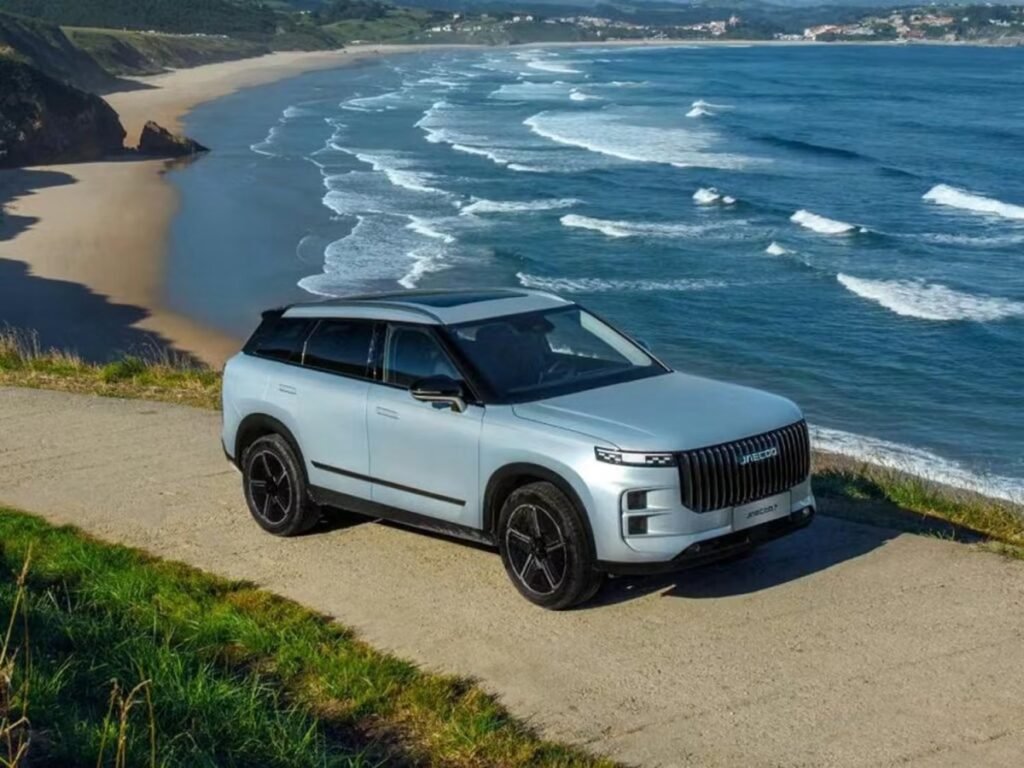
UK Considers Tariffs on Chinese EVs
Britain has not yet imposed additional tariffs on Chinese electric vehicles, but the government is examining its options. UK ministers have previously said they are concerned about overcapacity and market-distorting practices affecting domestic industries. In July 2026, the government confirmed that it was assessing possible measures, including tariffs, while noting that the independent Trade Remedies Authority would normally investigate whether trade remedies are required.
The latest discussion has gained importance because of the European Union’s approach to Chinese EV imports. The EU introduced definitive countervailing duties on Chinese battery-electric vehicles in 2024, with the measures remaining in force in 2026.
Why Brussels Matters
The UK automotive industry remains closely connected to the European market. British manufacturers rely on European supply chains, while Europe is an important destination for vehicles produced in the UK.
The EU is also developing policies designed to strengthen manufacturing within Europe. This has created concerns that UK manufacturers could face disadvantages if Britain does not align with certain European trade and industrial rules.
Reports indicate that the UK is seeking recognition as a trusted partner under the EU’s emerging “Made in Europe” approach. At the same time, British policymakers want any decision on Chinese EV tariffs to reflect the UK’s own economic interests rather than simply copying Brussels.
Growing Chinese EV Presence
Chinese automotive brands have expanded rapidly in the UK. Companies such as BYD, Omoda and Jaecoo have increased their presence as demand for electric vehicles grows.
According to recent industry reporting, Chinese brands accounted for around 12% of UK car sales in 2026. Their competitive pricing and growing range of electric and hybrid models have made them increasingly visible in the British market.
For consumers, Chinese EVs have provided more choice and increased competition. However, the rapid expansion has also generated concerns among parts of the automotive industry about the effect of heavily subsidised imports and increasing pressure on domestic manufacturers.
Potential Impact on Car Prices
If the UK introduces a substantial tariff, imported Chinese electric vehicles could become more expensive. Manufacturers could potentially absorb some of the additional cost, but some of it could eventually be reflected in vehicle prices.
Higher prices could affect consumers looking for affordable electric cars. Chinese manufacturers have been particularly competitive in the lower and mid-priced segments, where pricing can play an important role in purchase decisions.
At the same time, tariffs could provide additional protection for manufacturers operating in Britain. The government therefore faces a difficult balance between encouraging competition and supporting domestic automotive production.
China Could Respond
Another consideration is the potential response from Beijing. China is an important trading partner for the UK, and additional restrictions on Chinese vehicles could create wider trade tensions.
Chinese manufacturers are also increasingly considering local production and partnerships in overseas markets. Some companies have explored manufacturing opportunities in Europe, which could eventually change how tariffs affect their business strategies.
China’s automotive industry has also shown flexibility in responding to European trade measures. Recent analysis suggests Chinese manufacturers have increasingly looked toward hybrids and other vehicle categories as trade conditions evolve.
A Decision With Wider Consequences
The UK’s potential tariff decision is not only about electric cars. It could influence investment, supply chains, consumer prices and Britain’s relationship with both China and the European Union.
There is also a separate UK-EU issue involving rules of origin for electric vehicles and batteries. From 2027, stricter requirements are scheduled to apply under the post-Brexit trade framework, potentially creating additional costs for vehicles that do not meet local-content requirements. Industry groups have warned that existing supply-chain dependence on Chinese battery materials could make compliance challenging.
For now, no 45% UK tariff on Chinese EVs has been formally introduced. The government is still considering its options. The final decision could therefore have a major influence on the UK’s electric vehicle market and its position between European industrial policy and China’s growing automotive industry.
FAQs
1. Is the UK imposing a 45% tariff on Chinese EVs?
No. The UK is considering possible tariffs, but a 45% tariff has not been formally introduced.
2. Why is the UK considering tariffs on Chinese electric cars?
The government has raised concerns about overcapacity and market-distorting practices and is assessing options to protect UK industries.
3. Does the EU already have tariffs on Chinese EVs?
Yes. The European Union introduced definitive countervailing duties on Chinese battery-electric vehicles in 2024.
4. Could UK tariffs make Chinese EVs more expensive?
Potentially. Import tariffs can increase the cost of bringing vehicles into a market, although manufacturers may absorb some or all of the additional cost.
5. Why is the decision important for the UK car industry?
The decision could affect vehicle prices, Chinese investment, domestic manufacturing, supply chains and the UK’s trading relationship with the EU and China.