Hyundai and Kia have become popular names in the electric vehicle industry, particularly because of their advanced 800-volt charging architecture. Models such as the Hyundai Ioniq 5, Ioniq 6, Kia EV6, and Kia EV9 support ultra-fast charging, allowing drivers to recharge their batteries significantly faster than many conventional electric vehicles. However, despite having an 800V electrical system, these vehicles cannot always reach the advertised 350kW charging speed.
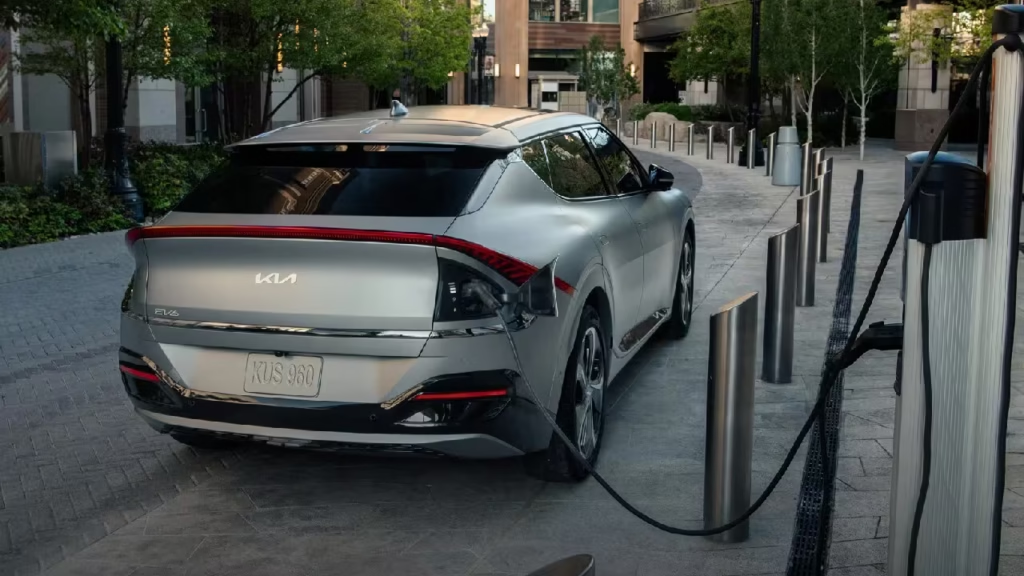
The reason is simple: an 800V architecture does not automatically guarantee 350kW charging. Actual charging speed depends on battery voltage, charging station capabilities, battery temperature, state of charge, and the vehicle’s maximum charging power.
Understanding the 800V Charging Architecture
Hyundai and Kia use an advanced 800V electrical architecture in several electric vehicles based on their E-GMP platform. Compared with traditional 400V systems, this architecture allows higher electrical power to flow with lower current for the same power output.
Lower current can reduce electrical losses and improve charging efficiency. It also allows manufacturers to design charging systems capable of delivering exceptionally fast charging speeds.
However, the vehicle’s battery pack does not necessarily operate at exactly 800 volts under every condition. Battery voltage changes depending on its state of charge, temperature, and internal characteristics.
This means the charging system must continuously adjust voltage and current according to the battery’s requirements.
Why 350kW Charging Is Not Always Possible
One of the biggest misunderstandings about electric vehicle charging is assuming that an 800V vehicle can automatically accept 350kW from any compatible charging station.
Charging power is calculated using voltage multiplied by current. Even if a charging station advertises 350kW, the vehicle must be capable of accepting the required combination of voltage and current.
For example, a charger delivering 350kW at 800V would require approximately 438 amperes of current. The vehicle’s battery, charging electronics, and thermal management systems must support those conditions.
Many Hyundai and Kia electric vehicles have maximum DC charging power ratings below 350kW. Consequently, connecting them to a 350kW charging station does not mean they will receive the full advertised power.
The charger can provide more power than the vehicle accepts, but it cannot force the battery to charge beyond its permitted limits.
Battery Temperature Plays an Important Role
Battery temperature is another major factor affecting charging performance.
When the battery is too cold, its charging capability decreases because lithium-ion cells cannot safely accept high current under unsuitable temperature conditions. Similarly, an excessively hot battery may require reduced charging power to prevent overheating.
Hyundai and Kia vehicles use battery conditioning and thermal management systems to help prepare the battery for fast charging.
Preconditioning can improve charging performance when the battery reaches an appropriate temperature before arriving at a charging station. However, it does not guarantee maximum charging power in every situation.
State of Charge Changes Charging Speed
Electric vehicle charging does not remain at maximum power throughout the charging session.
At lower battery percentages, vehicles can generally accept higher charging power when conditions are suitable. As the battery approaches higher charge levels, charging speed gradually decreases.
This process is called charging taper.
For example, a vehicle might achieve its highest charging power at a relatively low state of charge but charge much more slowly beyond 70% or 80%.
This is why charging from 10% to 80% is often considerably faster than charging from 80% to 100%.
Charging Station Limitations
The charging station itself can also limit power delivery.
A 350kW charger may share power between multiple connectors or vehicles. Depending on its design, the station may have restrictions related to voltage, current, temperature, and available electrical capacity.
Some chargers also have different power capabilities across their operating voltage ranges.
Therefore, even a compatible 800V vehicle may experience lower charging speeds when using a charger with insufficient voltage or current capabilities.
What Hyundai and Kia Drivers Should Expect
Hyundai and Kia electric vehicle owners should focus on their vehicle’s official maximum DC charging specifications rather than simply choosing the highest-rated charging station.
For the fastest charging experience, drivers should:
- Use compatible high-power DC charging stations.
- Activate battery preconditioning before fast charging when available.
- Arrive with a relatively low battery percentage.
- Avoid expecting peak charging power throughout the session.
- Check whether the charging station shares power between vehicles.
Final Verdict
An 800V electrical architecture provides important advantages for electric vehicles, including improved charging efficiency and the potential for exceptionally fast charging.
However, it does not automatically mean every Hyundai or Kia electric vehicle can charge at 350kW. The battery pack, charging electronics, thermal management system, charging station, and battery state of charge all determine the actual charging speed.
Understanding these limitations helps EV owners choose better charging stations and enjoy more realistic expectations about charging performance.
Frequently Asked Questions (FAQs)
1. Does an 800V Hyundai or Kia support 350kW charging?
Not necessarily. Most Hyundai and Kia E-GMP vehicles have maximum DC charging power ratings below 350kW.
2. Why does an 800V electric vehicle charge slower than expected?
Charging speed depends on battery temperature, state of charge, charger capabilities, and the vehicle’s maximum charging power.
3. Can a Hyundai Ioniq 5 use a 350kW charging station?
Yes, compatible Ioniq 5 models can use 350kW charging stations, but they will only draw the maximum power supported by their charging systems.
4. Does battery preconditioning improve EV charging speed?
Yes, battery preconditioning helps bring the battery to an optimal temperature for faster DC charging.
5. Why does EV charging slow down after 80%?
Charging power decreases at higher battery percentages to protect battery health and maintain safe charging conditions.